
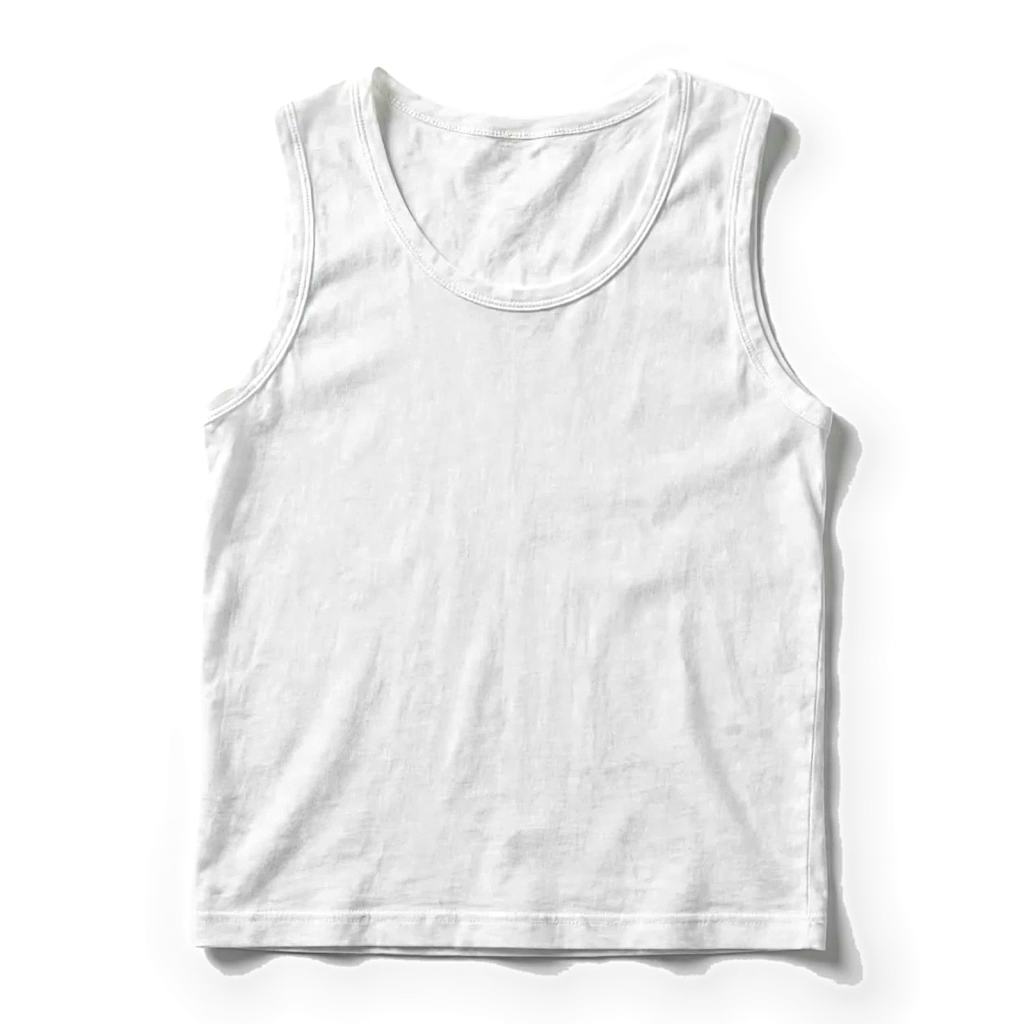
Tank Top T-Shirt Manufacturer Bangladesh for Summer, Gym and Layering Programmes
One sleeveless shape does three different jobs in a buyer’s range. As training wear it must move with the body and survive constant washing. On a summer rail it has to look clean and deliberate, not like a t-shirt with sleeves cut off. As a layering piece it needs a smooth, light body that sits flat under shirts and knitwear. We specify each job separately and sew all three on the same lines in Bangladesh.
Tank Top T-Shirt Fabric Options
- Single jersey in 100 percent cotton at 150 to 160 GSM – the warm-weather staple, cool against the skin
- Ribbed cotton for the close-fitting vest body that stretches and springs back
- Cotton blended with elastane for ladies and fashion fits that follow the body
- Polyester and open mesh cloth for sport and training styles that dry quickly
- Slub and melange jerseys for retail ranges that want a softer, worn-in hand feel
Where a programme asks for it, fabrics arrive pre-shrunk and bio-washed, so the size tried in store is still the size worn at the end of the season.
Tank Top Styles, Necklines and Fits
The classic tank pairs a scoop neck with bound edges and a standard armhole, in regular and relaxed fits. The racerback pulls the straps together between the shoulder blades, which suits training wear and ladies ranges. The muscle cut opens the armhole deeper and eases the body for gym programmes, where movement matters more than coverage.
Ladies styles are shaped through the waist instead of simply cut narrower, and grading runs from XS to 3XL with the neck drop and armhole kept in proportion at both ends of the run. A longer body length is available for layering ranges and markets that prefer more coverage, settled at sampling before a single bulk panel is cut.
Binding, Armhole and Racerback Craft Behind Gym Tanks for South Korea, the Netherlands and the USA
On a garment with no sleeves, the edges carry the whole design. We cut neck and armhole binding from the garment’s own fabric or a matched rib, shape it to the curve, and stitch it under slight tension so it hugs the body without digging in. Shoulder seams stay narrow, flat and reinforced, because two small seams hold up the entire garment.
Gym buyers test this craft hardest. Training brands in South Korea and the USA order racerbacks season after season and reject any binding that rolls after washing, while Dutch retail programmes judge the same edge work on layering tanks worn under shirts. The standard is one: an edge that looks clean on the rail and still lies flat after a summer of wear.
Printing, Embroidery and Branding on Tank Tops
A tank offers one clean panel of chest, and placement decides whether a print looks sharp or awkward: too high and it crowds the binding, too low and it lands on the stomach. We set positions size by size against the approved sample, and favour water-based, soft-hand inks that flex with light cloth instead of cracking across it.
Small embroidered marks sit neatly at the chest or the hem, and a side-seam woven label carries the branding where a programme wants an unbroken front. Festival buyers in France often run tanks beside printed tees in the same season, and our promo t-shirts are printed on the same floor to the same colour standard, so both match on the rail.
Colours, Sizes and GSM for Tank Programmes
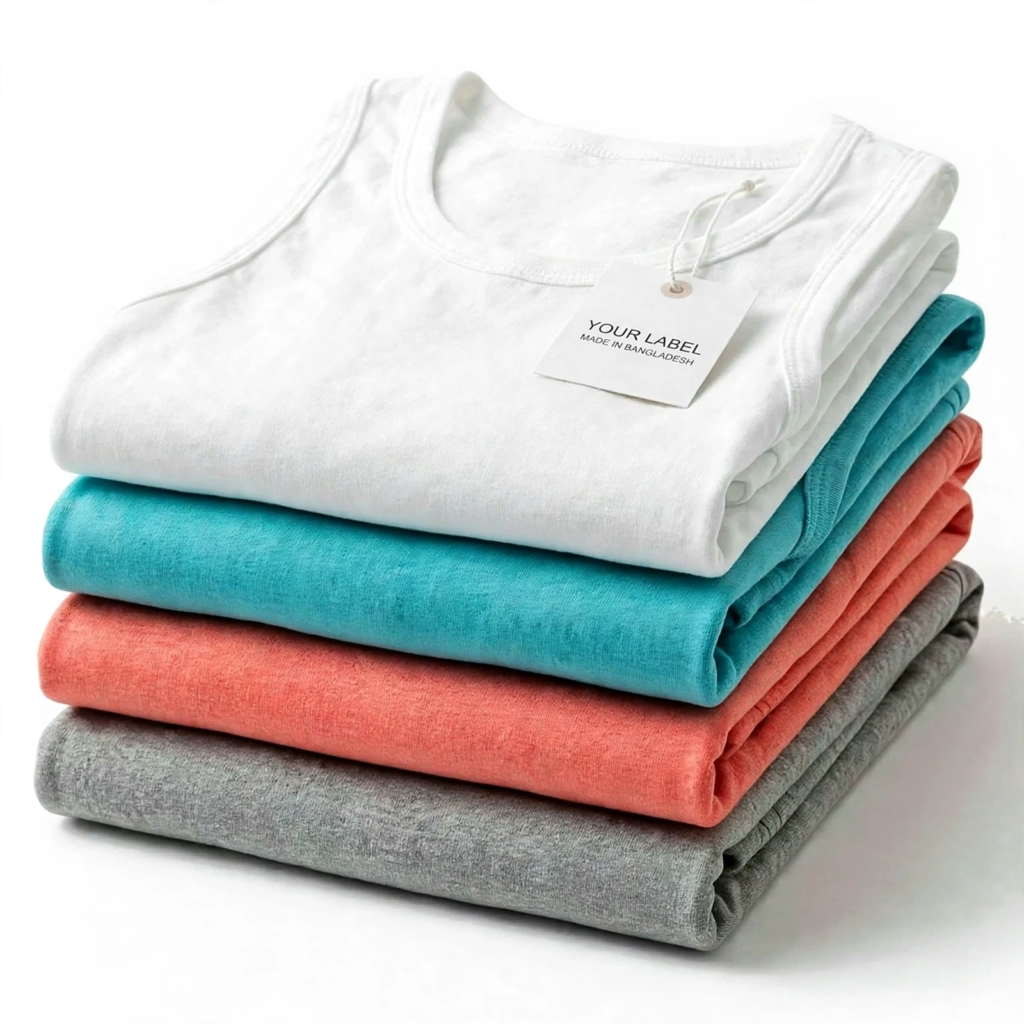
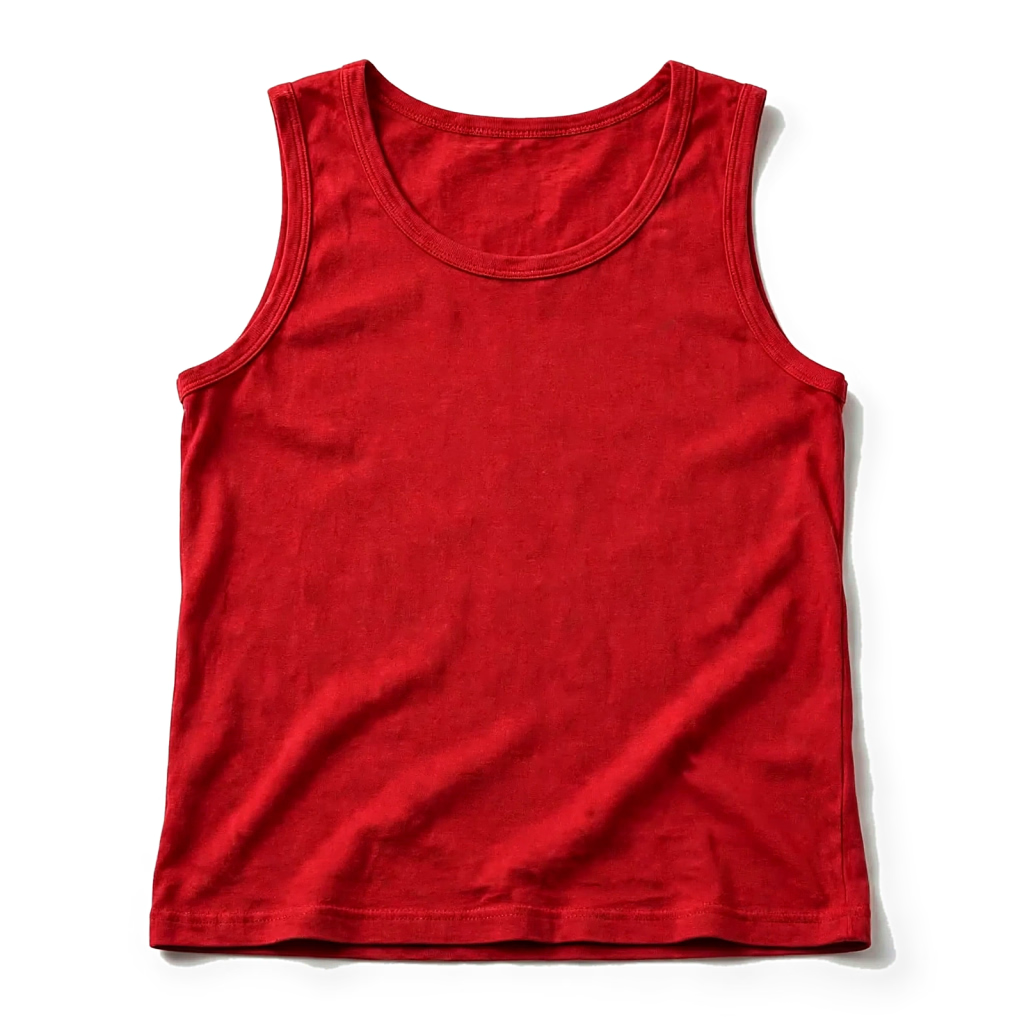
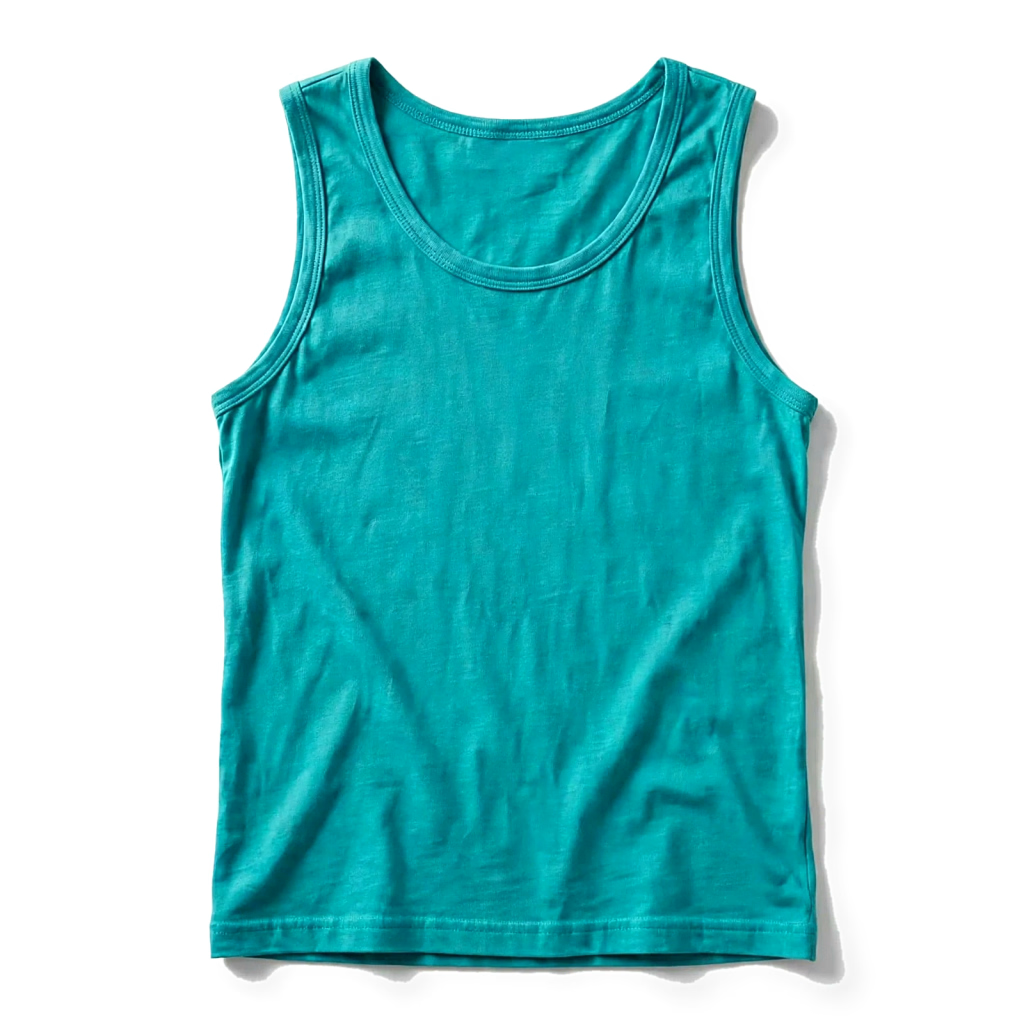
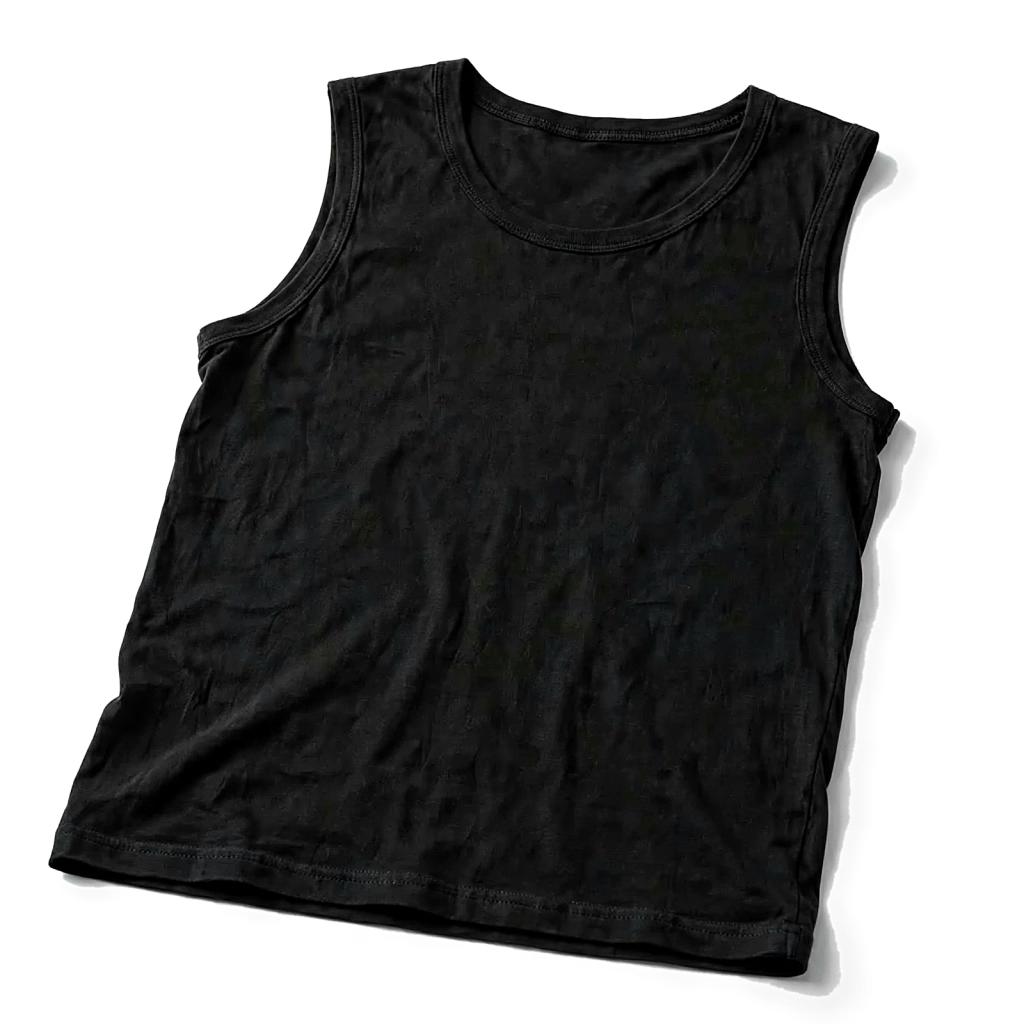
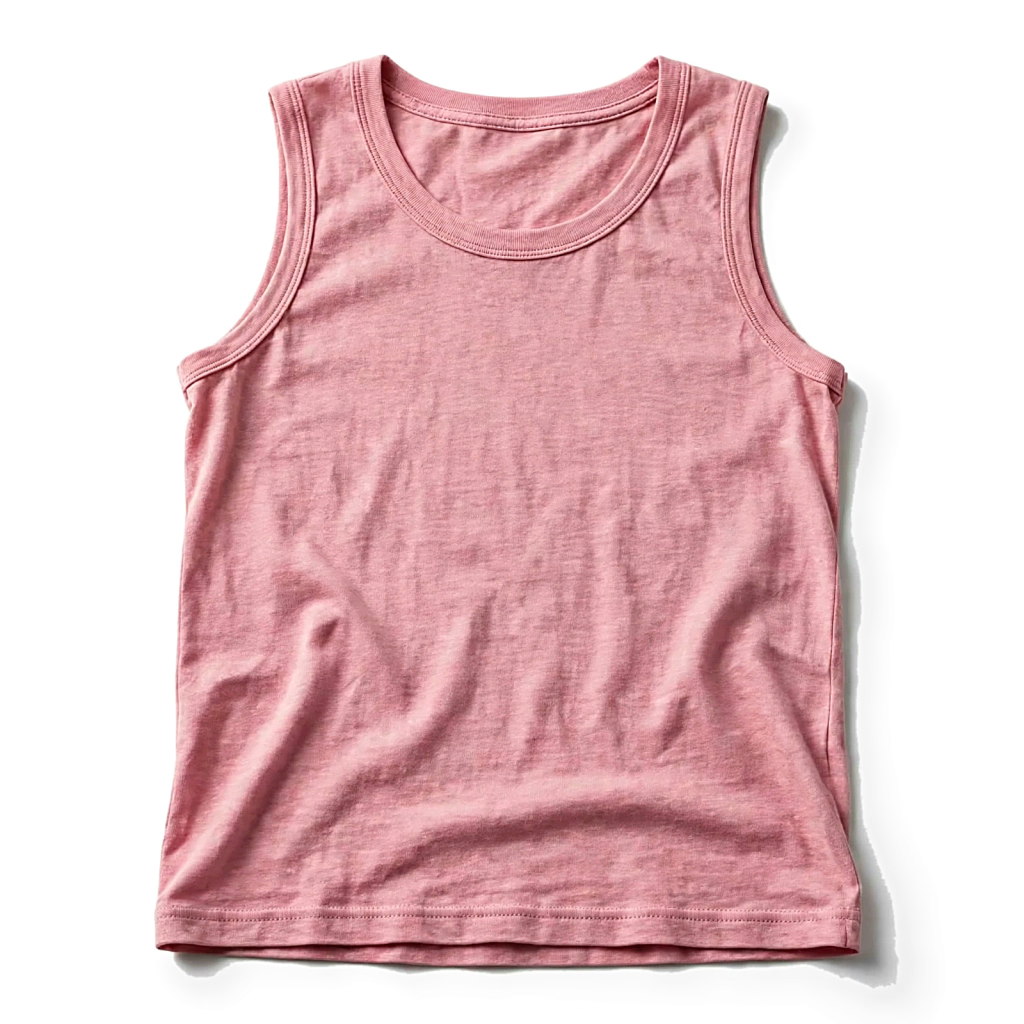
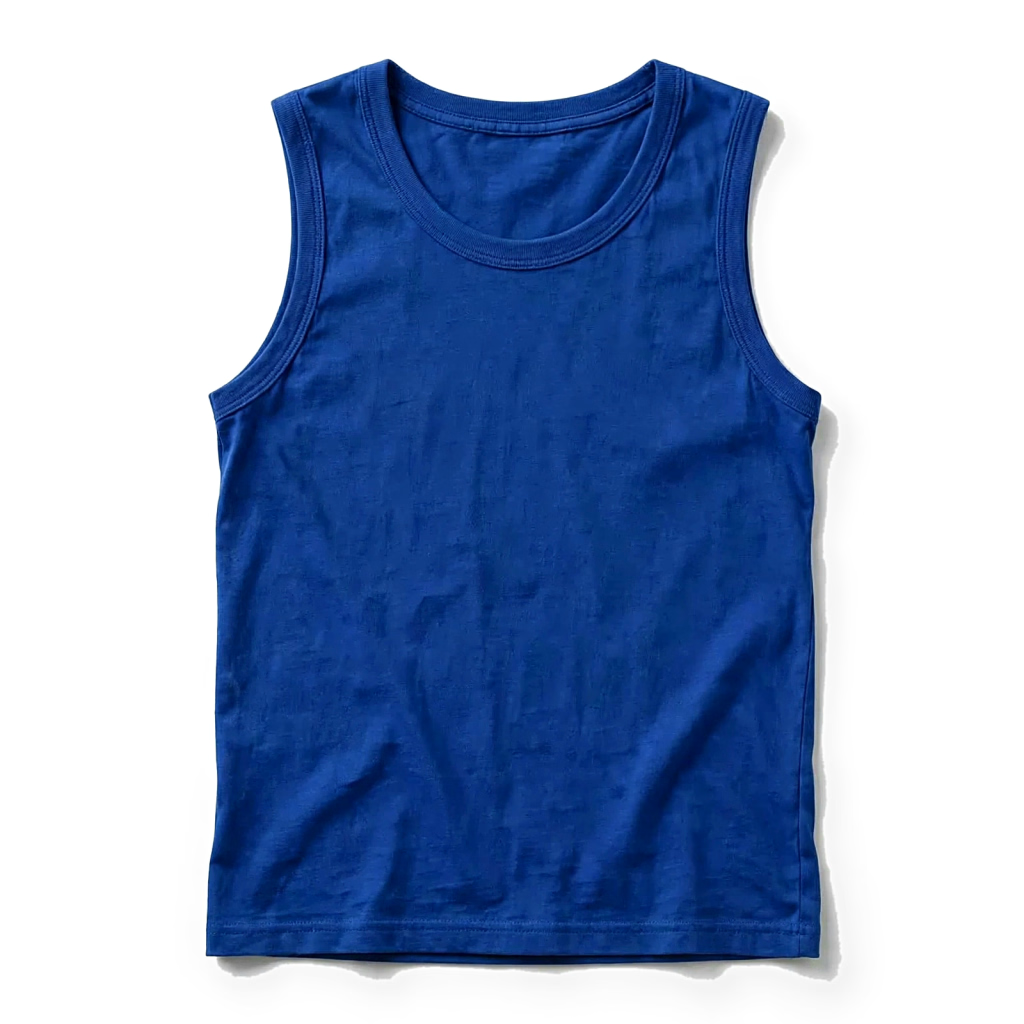
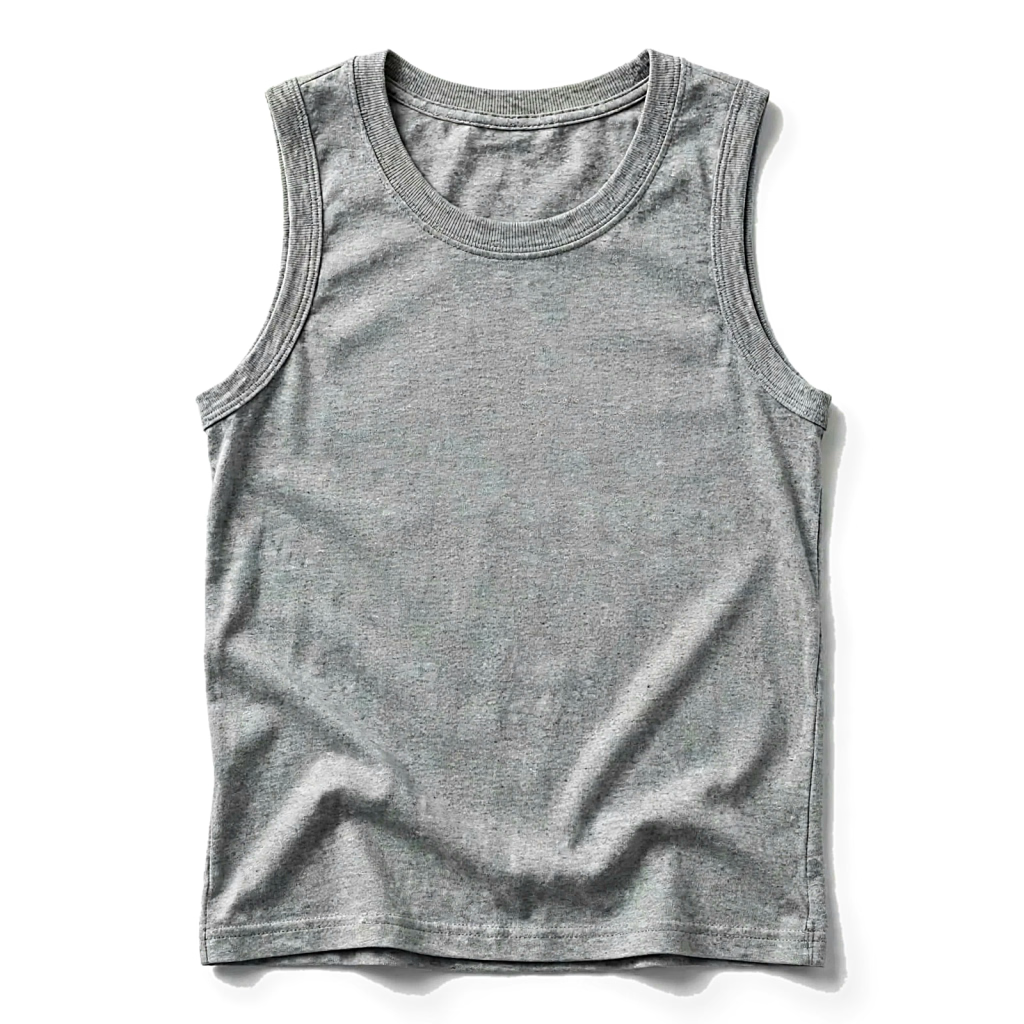
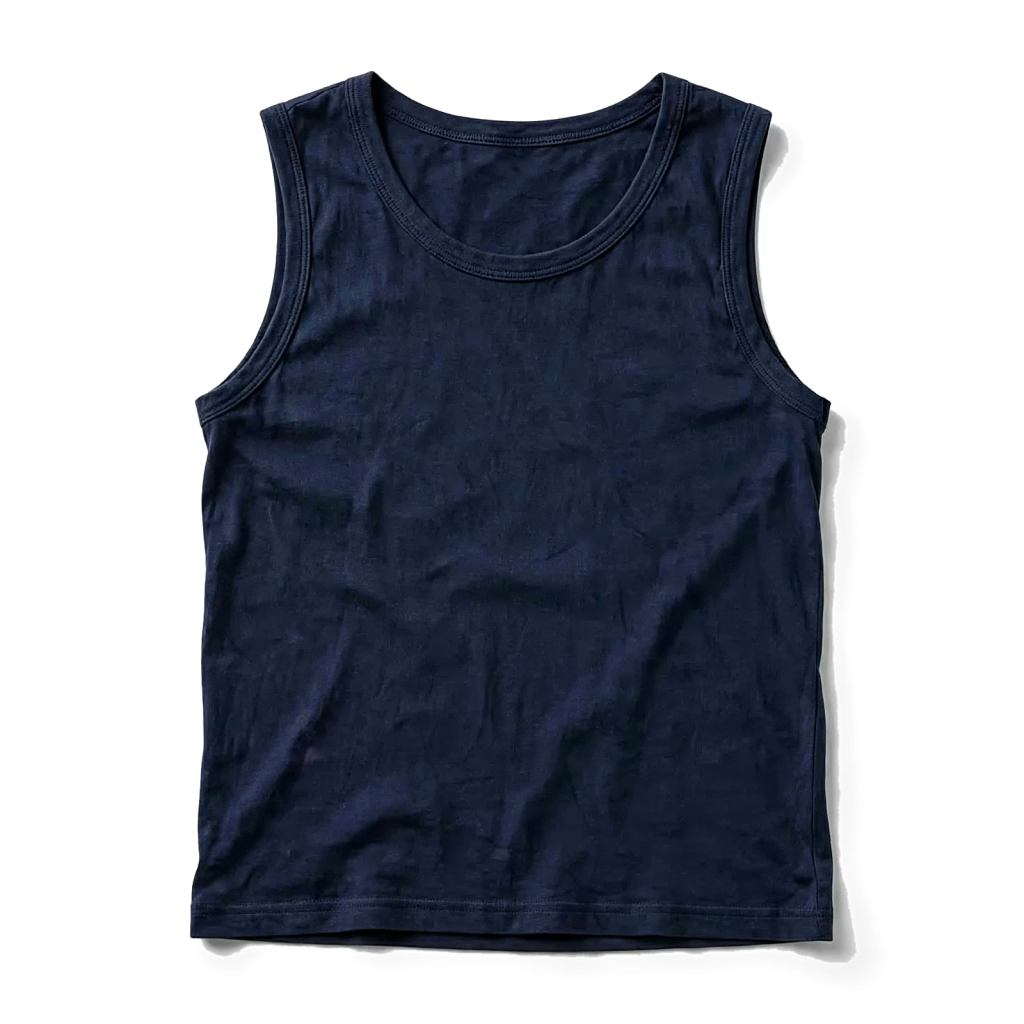
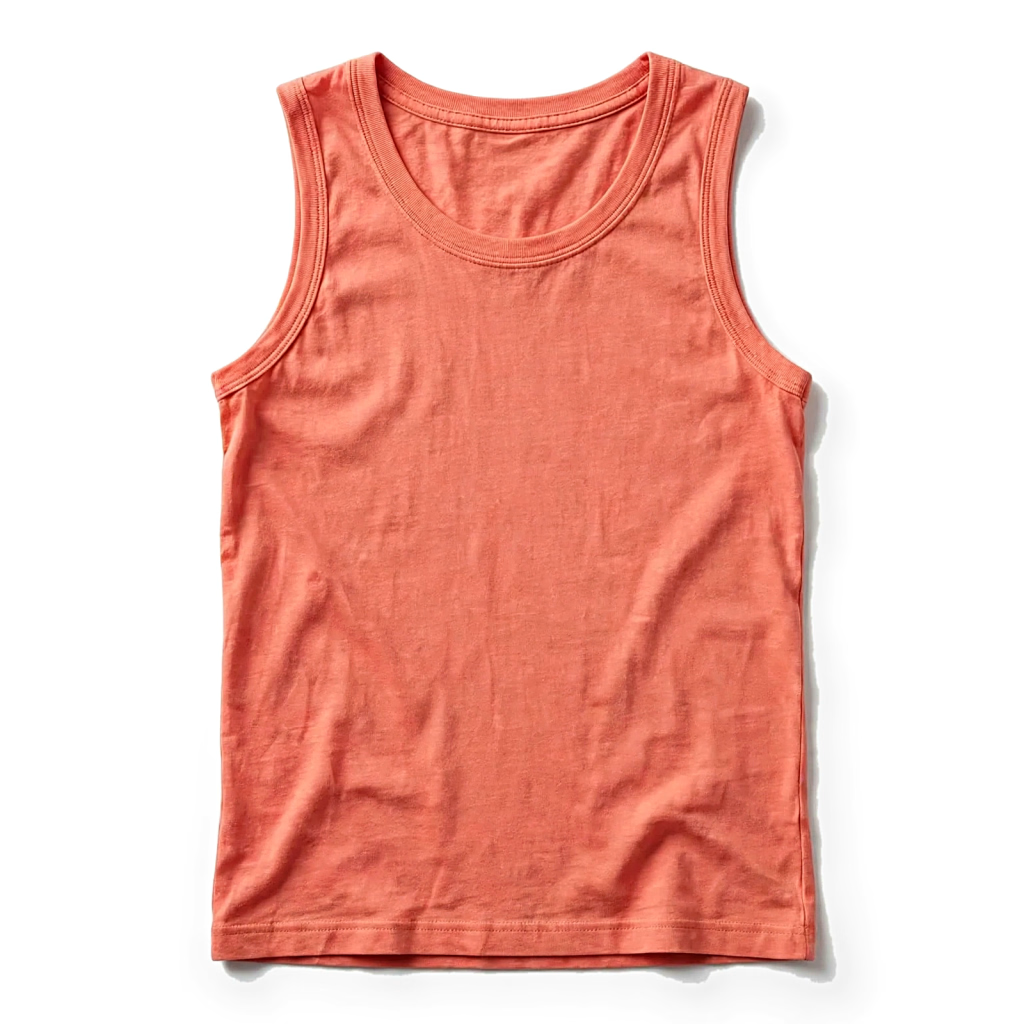
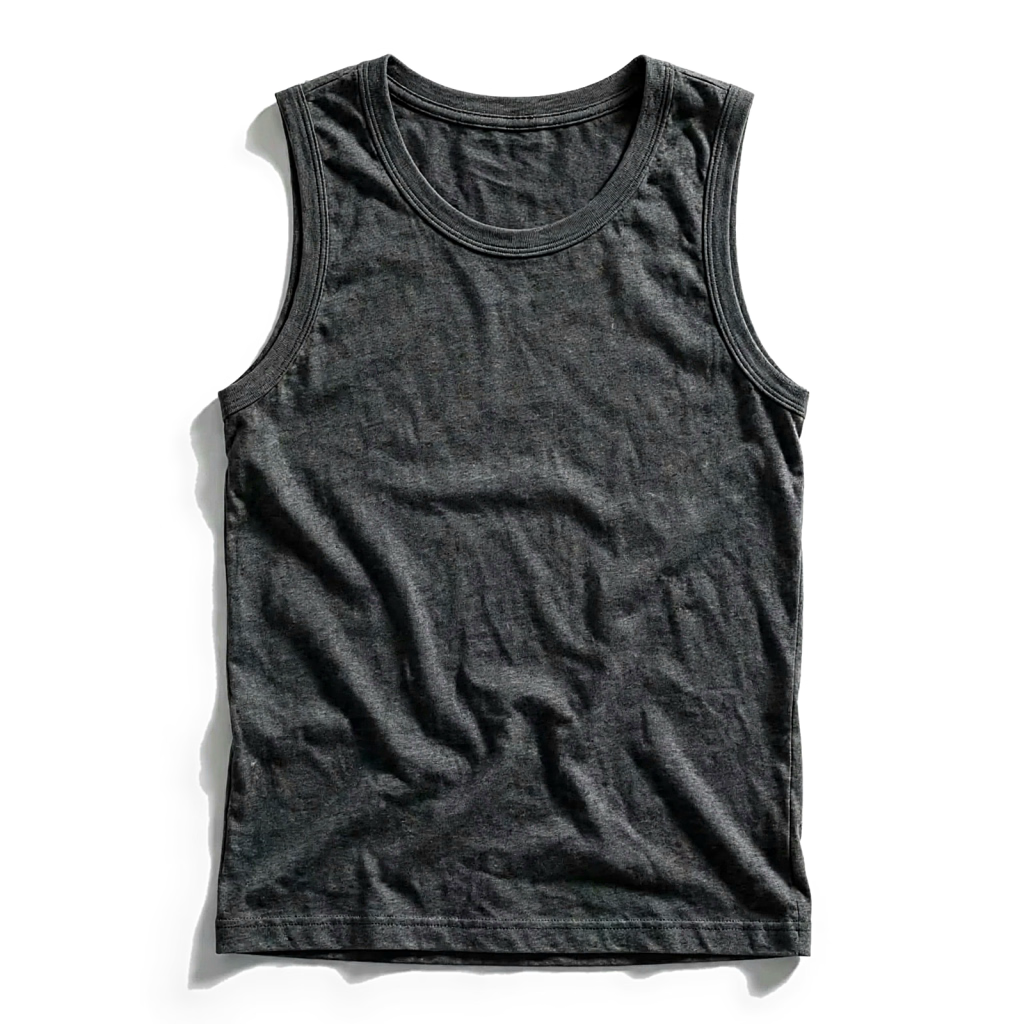
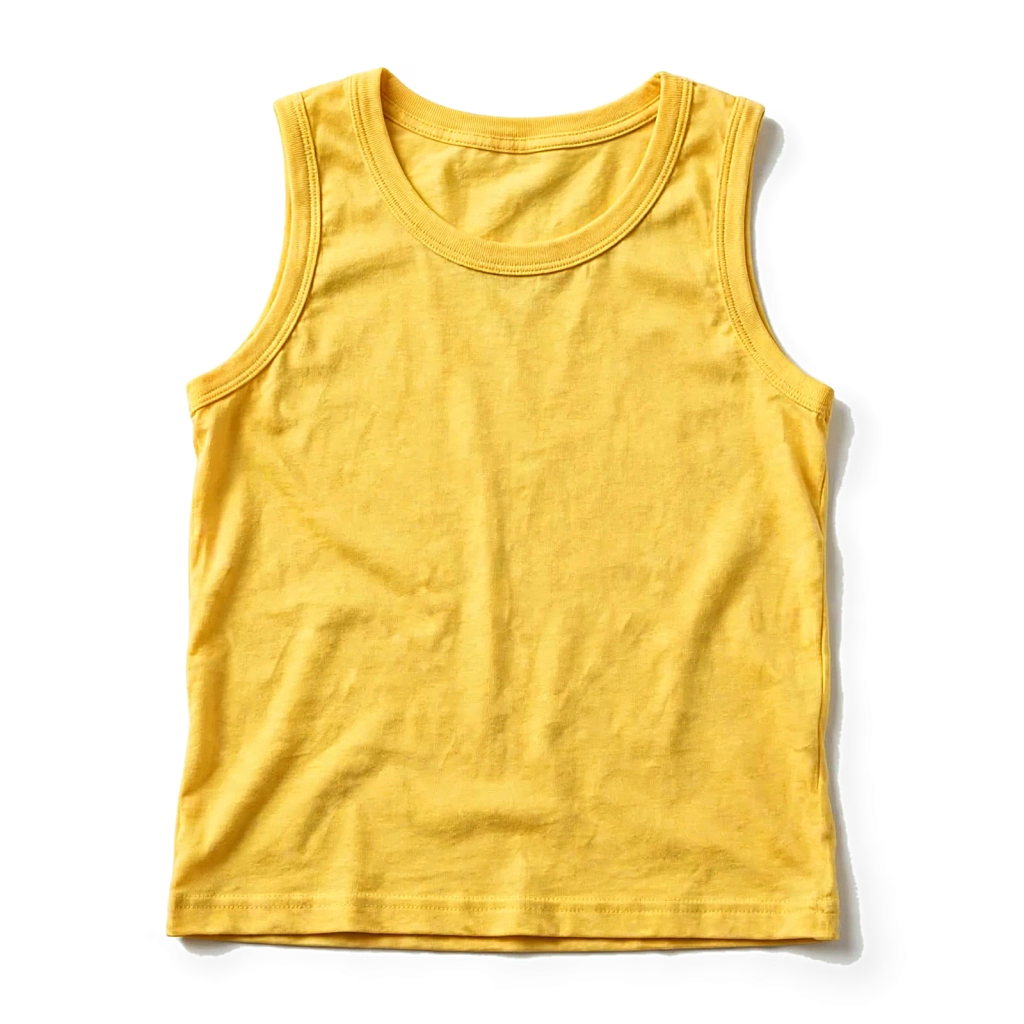
White, black, grey marl and navy carry most programmes through the year, and the summer palette – red, royal blue, turquoise, coral and yellow – is dyed in the same cloth qualities so bright shades fade at the same rate as the core colours.
Size curves follow the audience: gym ranges lean toward larger sizes with a deeper armhole, retail ranges follow the standard curve, ladies ranges are graded on their own pattern. Weight follows the job too: lighter cloth around 140 to 150 GSM for layering pieces, and 160 GSM or above for standalone tanks that must stay opaque against the skin. In the Netherlands, where tanks sell as layering staples beyond summer, the lighter weight is the volume line.
Sampling and Fit Checks
With tanks, sampling is mainly a fit exercise. The first sample is sewn in the production fabric and checked on a stand or a fit model, with armhole depth, neck drop and body length measured against the brief and photographed from front, side and back. Buyers in Germany, Canada and Australia usually hold couriered samples within the week, and corrections agreed here are written into the production file the finished cartons are checked against.
Quality Assurance and Production Follow-Up
Light cloth hides nothing, so checking starts early: binding tension on the first pieces off each line, armholes compared left against right, print position and hand feel, then full measurements before folding. Summer shades are read under standard light, because pale colours betray variation that dark colours forgive. A final AQL inspection closes the order, results and photographs go to the buyer, and one named contact follows production from cutting to carton.
Tank Tops for Gyms, Festivals and Summer Retail
Three buyers judge the same garment three ways. Gym brands need a tank that survives daily washing with the logo intact. Festivals and summer events need printed merchandise people actually keep wearing after the weekend. Retailers need the simplest honest refresh a summer rail can get, in mens, ladies and kids sizes sharing one shade story.
In the southern states of the USA a tank is close to year-round clothing, while in Sweden it is a short, intense season that has to land exactly on time. Both buyers end up judging the same things: whether the armhole sits clean, whether the side seams stay straight, and whether the print still looks new in August.
Why Source Tank Top T-Shirts from Bangladesh?
A tank is mostly edge work and light jersey, and that plays to what Dhaka does best: fine-gauge knitting in mills around the city, and operators who bind necklines and armholes all day to a retail standard. Because knitting, dyeing, sewing and printing sit close together, a summer programme can be corrected and re-run inside the season rather than after it. The result is a garment clean enough for a fashion rail, at a cost that works for promotional volumes.
Why Choose Siatex Bangladesh?
Siatex Bangladesh has manufactured garments since 1987, and sleeveless styles are a standing part of our production rather than a sideline. Your fabric, binding, print position and packing details sit in one file held by one team, and the fit approved at sampling is measured again at final inspection.
Repeat orders run from that held file, so the tank your customers bought last summer is the tank that arrives this summer. Buyers running unbranded programmes will find the same binding standards on our blank t-shirts for printing.
Looking for a Tank Top T-Shirt Manufacturer Bangladesh?
Send us your tech pack, or the plan for the range if the tech pack is still being drawn up, and we will come back with a price and a sampling route. If you are deciding between two fits or two fabric weights, ask for both in the sample round and judge them in the hand – a tank has to be felt to be chosen.
Siatex Bangladesh
Made in Bangladesh
OEM/ODM Private Label Production Only
Choosing Between Classic, Racerback and Muscle Fits
The three core shapes are not interchangeable, because each one suits a different wearer. The classic scoop is the all-rounder: it layers under almost anything and offends nobody, which is why retail programmes default to it. The racerback belongs to training and ladies ranges, freeing the shoulder blades and keeping the front panel smooth for printing while the body moves.
The muscle cut, with its deeper armhole and easier body, is gym clothing and warm-climate wear, and it is the shape that punishes careless grading: a couple of centimetres of armhole depth is the difference between a confident fit and one nobody wears twice. Whatever the shape, put it on a real wearer before the run is committed – it is the cheapest decision in the programme.
Lightweight Fabrics – Keeping Tanks Cool Without Going Sheer
Every summer brief asks for lighter, and every failed tank shows where lighter ends: cloth so thin it turns transparent in daylight and twists after one wash. For a standalone cotton tank the honest floor sits near 150 GSM in a compact-spun yarn, which stays opaque while still breathing. Below that weight a tank is really a layering piece and should be sold as one.
Compact yarns cost a little more and save the programme in returns, because sheerness is the complaint that comes back most often on sleeveless reviews. Where a sport brief genuinely needs featherweight cloth, polyester mesh gets there without the transparency problem. A simple sampling test settles the argument: hold the tank against a window in daylight, then under a shop light, and if a hand behind the fabric shows as more than a shadow, the cloth is too light.
Printing on Tank Tops – Placement and Ink Choices
A tank print lives in a smaller, higher window than a t-shirt print, fenced by the neckline above and the armholes at the sides. Artwork should be centred in that window and scaled size by size, not run at one size across the range, with fine detail kept clear of the seams. On pale summer cloth, water-based inks keep the print soft and breathable; on dark tanks, discharge or high-opacity printing keeps the colour true without a heavy plastic feel.
Event buyers in the UK, Germany and the USA often run the same artwork across tanks and tees; holding one approved print standard across both keeps the merchandise reading as one family on the day. Finished cartons sail from Chattogram to Felixstowe for the UK, Rotterdam for the Netherlands and Los Angeles for the USA.